

ALAC and FLAC are two lossless audio formats that preserve the original quality of music. The main differences lie in their compatibility and file sizes:
- ALAC : Designed for the Apple ecosystem, it works great with iPhone, iPad, Mac, and Apple Music . However, support outside of Apple is limited.
- FLAC : An open-source format widely compatible with Windows, Android, Linux, and a variety of audio equipment. Files 2-5% smaller than ALAC.
What to choose? If you only use Apple devices, choose ALAC. If you have equipment from different manufacturers, FLAC will be a more practical solution.
Quick comparison table:
| Criterion | ALAC | FLAC |
|---|---|---|
| Sound quality | Uniform, lossless | Uniform, lossless |
| File size | A little bigger | Slightly smaller |
| Compatibility | Limited (Apple devices) | Wide (multiple platforms) |
| Format type | Proprietary | Open source |
| Metadata | Simpler | More flexible |
The choice depends on your equipment and needs. If you have any questions, AUTOGARSAS.LT specialists can help you find the right solution.
Which Lossless Audio Format Is Better: FLAC Or ALAC? - Audio Gear Insider
Sound quality comparison
Let's take a look at how the technical features and data processing affect the performance of ALAC and FLAC formats. Both formats ensure that the original sound remains intact , as they use lossless compression technology that does not lose a single bit of audio data.
The technical specifications of both formats are quite close. FLAC supports up to 32 bits and 655,350 Hz, while ALAC supports up to 32 bits and 384,000 Hz. However, in reality, most recordings are limited to 16 or 24 bits and 44.1, 48 or 96 kHz sampling rates, so these differences rarely become significant.
In terms of file size, FLAC is a bit more efficient . On average, FLAC files are 2-5% smaller: for example, a 4-minute song recorded in 16-bit/44.1 kHz format will take up about 25-30 MB, while ALAC is about 26-32 MB. Although ALAC's encoding speed is slightly faster on Apple devices, in reality this advantage is almost imperceptible. Another thing to consider is metadata support: FLAC uses a more flexible Vorbis comment system, which allows for storing a lot of additional information, while ALAC relies on the more limited iTunes metadata standards.
When using high-quality AUTOGARSAS.LT equipment , both of these formats allow you to unleash the full potential of your system without any loss of quality. Therefore, the choice between ALAC and FLAC often depends on device compatibility and personal needs rather than on technical differences.
Hardware and software support
The choice between ALAC and FLAC often comes down to their compatibility with various devices and applications. Each format has its own advantages in different technology ecosystems.
ALAC device support
ALAC, developed by Apple, works perfectly with Apple devices such as the iPhone , iPad , Mac , Apple TV , and HomePod . The format is natively supported by iTunes and Apple Music, so users can easily sync ALAC files between all their devices. This is especially convenient when listening to high-quality music via CarPlay in your car or a home audio system connected to your Apple TV.
However, outside of the Apple ecosystem, ALAC support is limited . On Windows computers, this format requires additional codecs or special applications such as VLC or foobar2000 . On Android devices, support depends on the manufacturer - some Samsung and LG phones support the ALAC format, but many others do not.
FLAC device support
The FLAC format is widely compatible with a variety of platforms and devices. It works natively with Android, Windows, and Linux, and the open source community ensures ongoing software support.
The FLAC format is supported by many well-known audio equipment manufacturers, such as Sony , Pioneer , Denon , Marantz , Yamaha , and KEF . These companies integrate FLAC support into their home theater systems, amplifiers, and network players. For example, Pioneer car audio systems offered by AUTOGARSAS.LT work perfectly with FLAC files.
Open source applications such as VLC, Audacity, MediaMonkey, and MusicBee also support the FLAC format, offering additional features such as metadata management and audio processing.
However, FLAC has limited support on Apple devices . While newer iPhones and Macs can play FLAC files, iTunes and Apple Music don't support them, so Apple users must use third-party apps.
If you only use Apple devices, ALAC is a more convenient choice. However, for mixed ecosystems, FLAC offers more flexibility and compatibility, especially with the professional audio equipment offered by AUTOGARSAS.LT. These compatibility aspects can be decisive when choosing the right format.
Best use cases
Having discussed the advantages of the different formats, let's now look at when each is best suited. Your choice should depend on the audio equipment you use, your devices, and your listening habits.
When to choose ALAC
If you're using the Apple ecosystem, ALAC is a great choice. This format is ideal for those who manage their music library through iTunes or Apple Music. ALAC makes it easy to sync music between devices, ensuring convenience and sound quality.
When using CarPlay in cars, the ALAC format ensures impeccable sound quality. For example, Alpine and Pioneer audio systems offered by AUTOGARSAS.LT perfectly support this format.
Additionally, ALAC is ideal for music creators and producers working with Logic Pro, GarageBand, or other Apple DAWs. Exporting projects in ALAC preserves the original audio quality, which is especially important for archiving.
In the home, ALAC works well with Apple TV and HomePod. If you use Bang & Olufsen or Bowers & Wilkins speakers connected to Apple TV, you can enjoy high-quality sound and a true cinema atmosphere.
When to choose FLAC
FLAC is the best choice for those who use devices from different manufacturers. If you have Android phones, Windows computers, and audio equipment from different manufacturers in your home, FLAC ensures seamless compatibility.
This format is particularly suitable for high-quality home audio systems . Amplifiers such as Marantz, Denon or Yamaha natively support FLAC, and together with speakers from KEF, Focal or Dali you can enjoy impeccable sound.
FLAC is also a great choice for network audio streaming. Wireless systems like Sonos , Bluesound , or Audio Pro work great with FLAC files stored on NAS drives. This allows you to create a centralized music library that is accessible throughout your home.
Audio enthusiasts appreciate FLAC for its ability to flexibly manage metadata and customize playback to specific needs. Programs like foobar2000 or JRiver Media Center allow you to take full advantage of the FLAC format.
Another important aspect is that FLAC is a great choice for archiving . Since it is an open source format, its future support is assured. In addition, its wide compatibility makes it easy to change audio equipment without losing your music collection.
When choosing between ALAC and FLAC, it is important to consider your existing and planned audio equipment. If you have any questions, AUTOGARSAS.LT specialists are always ready to help you choose the most suitable solution.
sbb-itb-02aace5
Comparison of advantages and disadvantages
When choosing between ALAC and FLAC, it's important to understand the strengths and weaknesses of each format. While both formats provide lossless audio quality, they differ in other important aspects.
The ALAC format is compatible with Apple devices. This format ensures smooth operation within the Apple ecosystem, making it extremely convenient for users of this technology. However, ALAC has limited compatibility with equipment from other manufacturers, so this can be a disadvantage if you use a variety of devices.
The FLAC format is characterized by its versatility. It works with a wide range of players, operating systems, and devices. Since it is an open source format, it can be continuously improved based on user needs. In addition, FLAC files are usually 2-5% smaller than ALAC, although this difference is not very significant.
Detailed comparison
The table below will help you better understand the main differences between ALAC and FLAC.
| Criterion | ALAC | FLAC |
|---|---|---|
| Sound quality | Identical, unlosable | Identical, unlosable |
| File size | A little bigger | Slightly smaller |
| Compatibility | Limited - Apple devices | Wide – various devices |
| Format nature | Proprietary rights protected | Open source |
| Metadata support | Good | Excellent |
| Streaming support | Limited | Wide |
| Future prospects | Depends on Apple's strategy | Long-term support guaranteed |
| Ideal use | Apple ecosystem | Universal use |
When choosing the right format, it's important to consider your existing and planned audio equipment. If you only use Apple products, ALAC may be a more convenient choice. However, if you use devices from different manufacturers or plan to change your audio system in the future, FLAC will provide more flexibility.
AUTOGARSAS.LT specialists advise choosing a format based on the equipment you have and possible directions for developing your sound system. When investing in high-quality sound equipment, it is important to think about the long-term operation and compatibility of the system.
AUTOGARSAS.LT product solutions
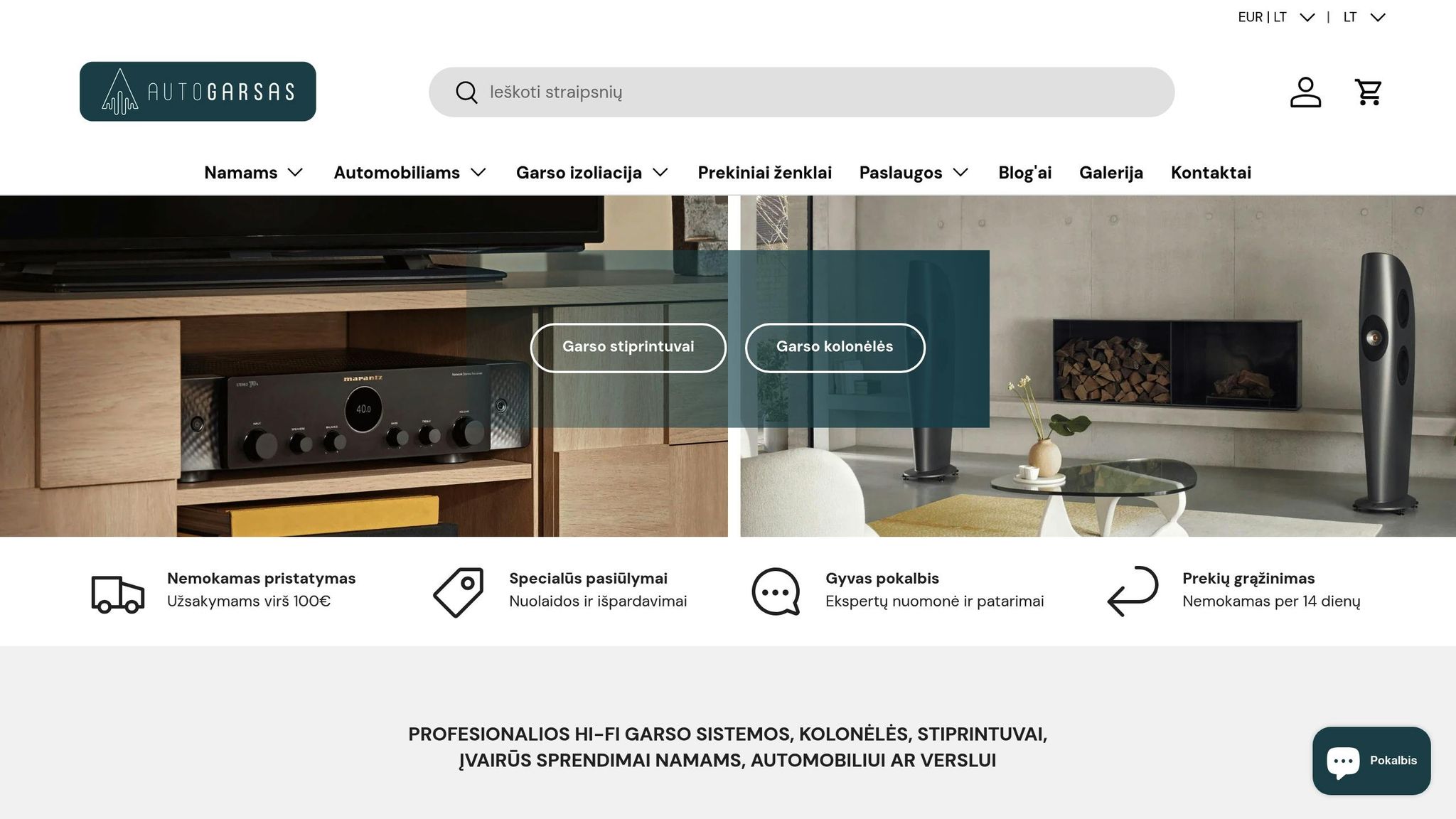
AUTOGARSAS.LT offers a wide selection of high-quality audio equipment that is perfectly compatible with ALAC and FLAC formats. Our experts create systems that maximize the capabilities of these formats.
For home audio systems, we recommend Cambridge Audio and Marantz network players, which natively support both formats. Bluesound and WiiM devices provide seamless music streaming, allowing you to play files directly from a NAS or computer without losing sound quality.
In car audio systems, we work with reliable manufacturers such as Pioneer , Kenwood and Alpine , which guarantee excellent sound reproduction. Additionally , Audison and Helix amplifiers are used, which further enhance the sound quality.
For professional solutions, we offer McIntosh and Arcam amplifiers - ideal for studios or concert halls. Focal and KEF speakers ensure that every sound detail is perfectly reproduced.
In our Kaunas showroom, you can try out equipment from various manufacturers with ALAC and FLAC files. Professional consultants will demonstrate how players and amplifiers reveal the advantages of these formats and help you choose the best solution. In addition, we offer individual projects tailored to your unique needs.
Individual solutions cover the entire process – from source selection to speaker placement. AUTOGARSAS.LT ensures not only the highest level of consultation, but also warranty and post-warranty service , so that your sound system will delight you with impeccable quality for a long time.
Final thoughts
Choosing between ALAC and FLAC should be based on the devices you use and your listening habits. Both formats provide the same sound quality, as they are both lossless, but their compatibility varies. FLAC is a better choice for those who use equipment from different manufacturers, as this format is compatible with a wider range of devices and applications. Meanwhile, ALAC is tailored to the Apple ecosystem - if your home is dominated by an iPhone, iPad, Mac or Apple TV, ALAC will work smoothly without additional settings.
If you only use Apple devices, ALAC will be the most convenient solution. However, if your equipment is from different manufacturers, the FLAC format will be a more practical choice, ensuring high sound quality regardless of the system used.
To choose the best format, it is worth visiting the AUTOGARSAS.LT showroom in Kaunas. Here you will be able to test how ALAC and FLAC sound through various players and amplifiers, and get professional advice on which format best suits your needs. Experts will help you utilize the capabilities of both formats and ensure the best listening experience.
FAQs
What is the difference between ALAC and FLAC formats, and what are their advantages and disadvantages when used with different audio equipment?
ALAC (Apple Lossless Audio Codec) and FLAC (Free Lossless Audio Codec) are two widely used lossless audio formats that provide high-quality sound by compressing data without losing any information. However, there are some differences between them that are worth knowing.
ALAC was developed by Apple, so it is perfectly compatible with Apple devices such as iPhone, iPad or Mac. If you are a user of the Apple ecosystem, this format will be a very convenient choice. However, if you use devices from other manufacturers, ALAC support may be limited.
FLAC , on the other hand, is an open-source format that is supported by a wide range of platforms and devices, including Windows, Android, and various music players. FLAC is often chosen by audiophiles due to its versatility and high sound quality.
When choosing between ALAC and FLAC, it is important to consider your equipment and ecosystem. If your devices support both formats, FLAC will provide more flexibility. However, for Apple users, ALAC will be a more convenient solution. Take advantage of the range of high-quality audio equipment offered by AUTOGARSAS.LT to enjoy the benefits of these formats.
Which format – ALAC or FLAC – is better if I use both Apple and non-Apple devices?
The choice between ALAC and FLAC depends on what devices you use and what your needs are. If you are involved in the Apple ecosystem and use devices like the iPhone , iPad , or Mac , the ALAC format will be ideal due to its excellent compatibility.
On the other hand, if you use devices from different manufacturers or want an open source solution that works with most platforms, FLAC is a more universal option.
Both formats provide lossless quality, so the audio quality remains identical. When choosing a format, it is important to consider your devices and listening habits.
Which format – ALAC or FLAC – is better for long-term music archiving?
FLAC is often considered a great choice for long-term music archiving due to its open-source nature and wide compatibility with a variety of devices and applications. This format is reliable and has earned the recognition of music enthusiasts and professionals alike.
On the other hand, the ALAC format, developed by Apple, is an ideal choice for those who use Apple devices. Thanks to their lossless technology, both FLAC and ALAC ensure impeccable sound quality, making both formats suitable for long-term music storage, provided that proper archiving standards are followed and the data is regularly maintained.
When choosing between these formats, it is necessary to consider what devices and programs you use. If you are not sure which option best suits your needs, AUTOGARSAS.LT specialists will be happy to help you find the most suitable solution.


