

In today's era of digital audio, lossless and lossy formats are the main choices that determine your listening experience. In short:
- Lossless : Retains all the information of the original recording. Perfect for high-quality systems, archiving, and professional use. Files are larger, but the quality is impeccable.
- Lossy : Reduces file size by removing some data. Best for everyday listening, mobile devices, and streaming. The loss of quality is often not noticeable in noisy environments.
Key differences :
- Lossless : FLAC , ALAC , WAV – high quality, large files.
- Lossy : MP3 , AAC – smaller files, widely compatible.
Important to know :
- The benefits of lossless formats are best revealed when using wired equipment.
- Bluetooth only supports lossy formats, so wireless headphones or speakers limit lossless quality.
Quick comparison :
| Aspect | Lossless | Lossy |
|---|---|---|
| Sound quality | Highest | Reduced |
| File size | Large (20-30 MB) | Small (3-10 MB) |
| Usage | Hi-Fi equipment , archives | Mobile devices |
Choose the format according to your needs, equipment, and listening environment.
Can I Hear the Difference Between Lossy and Lossless Audio? (Does it even MATTER?)
Lossless audio formats explained
Lossless audio formats are special in that they retain all the data from the original recording. Unlike lossy formats, which reduce file size by removing some information, lossless formats allow you to reproduce audio exactly as it was recorded. This difference determines the final sound quality and is important when choosing a format.
Main features of lossless formats
FLAC (Free Lossless Audio Codec) is one of the most popular lossless formats, especially among audiophiles. This open-source format can reduce file sizes to 50–60% of their original size without losing quality. [1] It is widely supported, although some Apple devices may not support it.
ALAC (Apple Lossless Audio Codec) is a format developed by Apple for use with Apple Music and iTunes . [1] [2] It offers a similar level of compression to FLAC, but is tailored to the Apple ecosystem.
WAV and AIFF are uncompressed formats often used for professional audio processing. WAV is popular on Windows, while AIFF is popular on Apple systems. Although these files take up a lot of space, their fidelity is unmatched [2] .
The technical characteristics of these formats reveal their strengths, which are important in certain situations.
Benefits of Lossless Audio
The main advantage of lossless formats is their impeccable sound quality, preserving all the details. Such formats are favored by audiophiles and professionals who seek to maintain the original accuracy of the recording for listening, editing or archiving [1] [3] [4] . AUTOGARSAS.LT offers Hi-Fi equipment, such as speakers, amplifiers and turntables, that support FLAC, ALAC and WAV formats, ensuring impeccable sound.
Because these files preserve all of the original information, they are a great choice for archiving music or converting it to other formats without losing quality.
When to use lossless audio
Lossless audio is ideal for situations where every detail of the sound is important. This includes home theater systems, audiophile listening, professional editing and archiving [3] [4] . In home theater systems, these formats allow you to feel every nuance. AUTOGARSAS.LT specialists recommend lossless formats for those who seek the highest quality listening experience.
Professionals such as music producers and sound engineers prefer lossless formats for precise editing and mixing of audio in studios. In addition, these formats ensure that the audio remains intact for long-term storage.
However, it is worth knowing that wireless technologies such as Bluetooth often only support lossy formats. Therefore, to enjoy lossless audio quality, it is recommended to use wired connections in conjunction with high-quality audio equipment.
Lossy audio formats explained
Lossy formats allow you to reduce the file size by removing certain audio details that are considered less important. Unlike lossless formats, which retain all audio details, lossy formats are designed to be user-friendly and save space.
How lossy compression works
Lossy compression is based on the principles of psychoacoustics – meaning that algorithms remove sounds that are usually not perceived by the human ear or that are obscured by other sounds [1] .
MP3 is one of the oldest and most widely used formats, dating back to the 1980s. It analyzes sound waves and removes certain frequencies. For example, if a song is dominated by drums and the background chords are barely audible, the MP3 algorithm removes those less noticeable details.
AAC (Advanced Audio Coding) is a more modern format that uses more advanced compression techniques to provide better sound quality than MP3 at the same bit rate. [1] [2] Meanwhile, Ogg Vorbis is an open source alternative that also uses similar audio coding principles. These formats are designed to be as efficient as possible.
Advantages of lossy formats
Lossy formats are particularly useful when it comes to saving space or reducing data usage. For example, a 3-minute recording in lossy format takes up only 3–5 MB, while lossless takes up 15–25 MB [1] . This allows for a file size reduction of up to 90%.
Additionally, smaller file sizes ensure faster downloads and lower data usage. In Lithuania, where mobile internet is sometimes limited or slow, lossy formats allow you to enjoy music without constant buffering or additional data costs.
Wide compatibility is another important advantage. MP3 and AAC formats work on almost all devices - from smartphones to car audio systems. For example, car audio systems offered by AUTOGARSAS.LT ensure smooth playback of these formats.
When to use lossy audio
Lossy formats are a great choice for everyday listening, especially on mobile devices. When traveling, exercising, or working, ambient noise often drowns out subtle audio nuances, making the quality difference between lossy and lossless files almost imperceptible.
It is also worth noting that Bluetooth only supports lossy formats [3] . As a result, wireless headphones or speakers work best with these formats. In addition, streaming platforms such as Spotify or YouTube Music use lossy formats to ensure smooth music playback even on slow internet connections. Smaller file sizes also allow for more efficient use of device memory, allowing you to store more music files at once.
sbb-itb-02aace5
Lossless vs Lossy: A Direct Comparison
Comparison Table: Lossless vs Lossy
To better understand the differences between these two types of audio formats, here is a detailed comparison based on key criteria:
| Aspect | Lossless audio formats | Lossy audio formats |
|---|---|---|
| Sound quality | Exactly matches the original | Quality reduced, depends on bitrate |
| File size | Large (20-30 MB for a 3-4 minute song) | Small (3-10 MB for the same song) |
| Storage needs | Requires a lot of space | Takes up little space |
| Equipment compatibility | Ideal for hi-fi equipment | Widely compatible |
| Streaming efficiency | Requires more data | Optimized for smooth flow |
| Most common formats | FLAC, ALAC, WAV | MP3, AAC |
| Use cases | Archiving, professional work | Daily listening |
Practical examples
The differences described in the table are best revealed in real-life situations.
For example, in a home environment, using high-quality audio equipment offered by AUTOGARSAS.LT , the advantages of lossless formats become obvious. Listeners can hear even the most subtle musical details that are often lost in lossy formats. However, in a car environment, where ambient noise drowns out fine details, 320 kbps MP3 files sound quite good and take up significantly less space.
On public transport or in the gym, where ambient noise further suppresses quality differences, the disadvantages of lossy formats become almost imperceptible. Meanwhile, in the case of streaming, the use of lossless formats can cause buffering problems if the internet speed is limited. Lossy formats in this case ensure smooth playback even on slower connections.
In terms of file size, FLAC files are significantly larger than MP3s, but they can be compressed to half the original size without losing any audio information. This is especially important for professionals who prefer lossless formats for their accuracy and quality.
AUTOGARSAS.LT specialists emphasize that the choice of formats should be compatible with the equipment you have. High-quality speakers and amplifiers reveal the advantages of lossless formats, while high-quality lossy files are often sufficient for simpler systems. Therefore, investing in the right equipment and choosing the right formats is important in order to exploit the full potential of the sound.
How to choose the right format
Factors to consider
Once you know the differences between formats, it's important to choose the most suitable option that best suits your listening habits and conditions. Here are some key factors that can help you make your decision.
The quality of your audio equipment is one of the most important criteria. If you use high-quality headphones, speakers, or amplifiers, lossless formats will allow you to enjoy better sound detail. Meanwhile, for simpler systems, high-quality lossy files are often sufficient.
Listening environment – noise level also plays a role. If you are listening to music in a quiet room, lossless format will provide better sound quality. However, when traveling or actively moving, lossy files will be more practical due to their smaller size and lower technical requirements.
Storage capacity and internet speed – If you have limited storage or a slow internet connection, a lossy format becomes a more convenient choice. For example, a 3-4 minute FLAC file takes up about 20-30 MB, while an MP3 (320 kbps) takes up only 7-10 MB.
Music genre and listening scenarios – if you like classical, jazz or acoustic music, lossless format will allow you to better appreciate the subtle nuances. Also, studio recordings or live concerts with complex instrumentation sound more impressive when used in lossless format.
Remember that Bluetooth listening is always lossy , regardless of the quality of the source file. Therefore, if you are listening through wireless devices, it is better to choose high-quality lossy files to avoid additional audio compression. By taking these factors into account, you will be able to choose the format that best suits your needs.
Recommended AUTOGARSAS.LT products
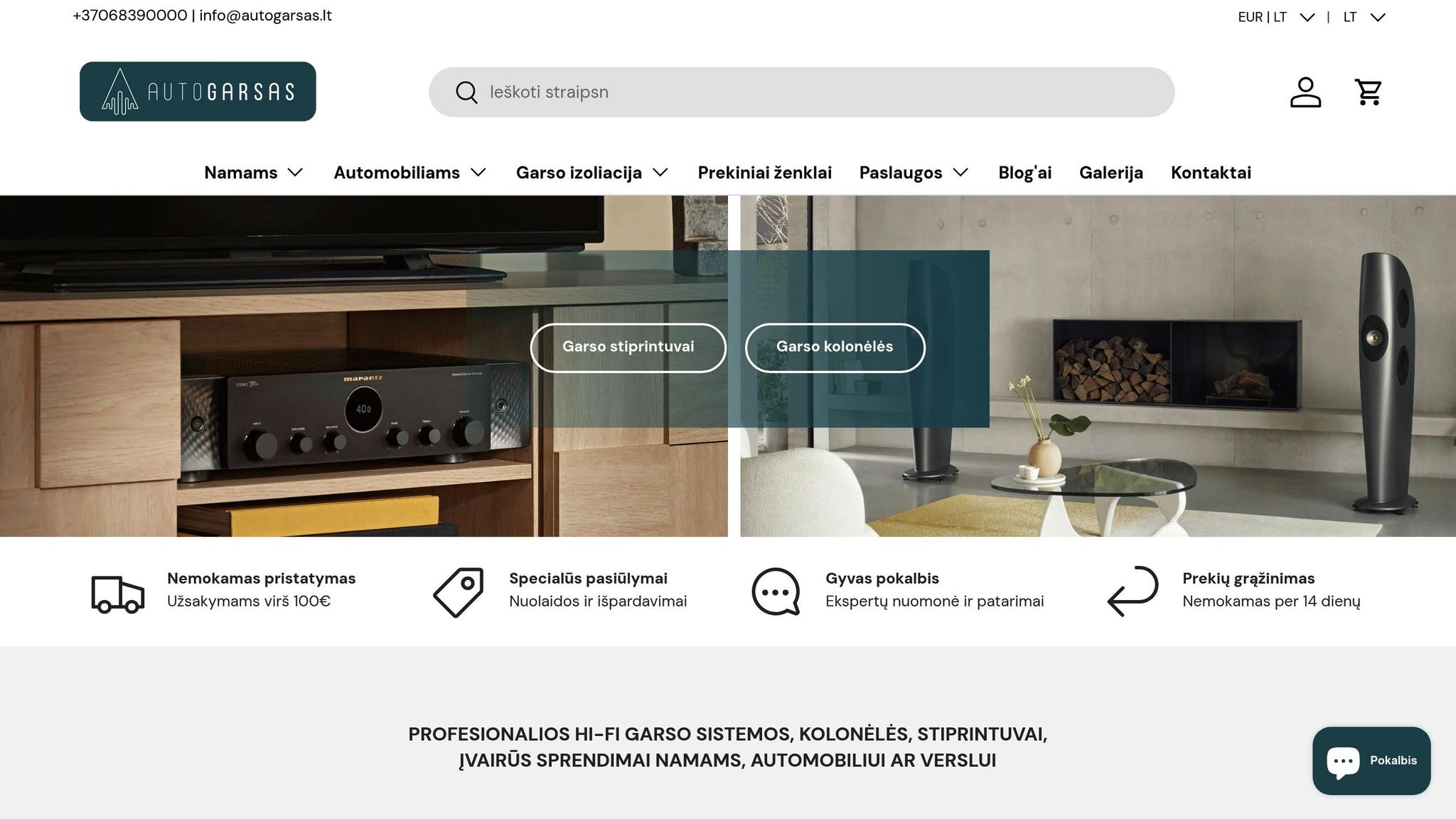
Taking into account the factors discussed, AUTOGARSAS.LT offers a wide range of audio equipment that will help you unlock the possibilities of lossless formats. Here are some recommended products:
- Audio amplifiers and speakers – ensure accurate and high-quality playback of lossless files, utilizing the system's potential.
- Hi-Fi headphones – allow you to enjoy an immersive listening experience with clear and detailed sound nuances.
- Home theater systems – provide spatial and dynamic sound, perfect for movies or music.
"Choose our audio amplifiers and get the most out of your sound systems - we guarantee quality and efficiency."
In addition, AUTOGARSAS.LT offers professional consultations by phone, email or in store. Experts will help you choose equipment according to your needs, budget and desired audio experience.
"They sincerely advised how and what wires to run, where and what speakers to place or connect. They put everything together on the project, and later installed the equipment. A true team of professionals!!!" – Daiva
Additionally, free delivery is offered throughout Lithuania for orders over EUR 100. You can also take advantage of professional installation and configuration services to achieve the best sound quality.
Conclusions
Key statements
When choosing audio formats, it is important to consider your needs – quality level, data size, and usage circumstances.
Lossless formats, such as FLAC and ALAC , preserve the original audio content, making them ideal for those who value impeccable quality, such as audiophiles or audio professionals. Meanwhile, lossy formats, such as MP3 and AAC, reduce file sizes by removing some of the audio information. This makes them ideal for everyday use, streaming, and mobile devices [1] .
It is important to note that Bluetooth transmissions always use lossy technology, regardless of the original file format [3] . However, a growing number of streaming services are offering lossless audio options , responding to the growing demand for higher quality audio [3] .
Given these differences, the choice of equipment becomes a crucial factor, and AUTOGARSAS.LT particularly stands out in this area.
Why choose AUTOGARSAS.LT
AUTOGARSAS.LT is a reliable partner for those who strive for the highest sound quality, regardless of the chosen format. With 27 years of experience, they not only offer a wide range of equipment, but also professional consultations to help make the right decisions.
Experts understand that sound quality depends not only on the format, but also on the right equipment. High-end amplifiers, speakers and Hi-Fi headphones allow you to unleash the benefits of lossless formats, ensuring exceptional sound reproduction both at home and in other environments.
AUTOGARSAS.LT is committed to customer satisfaction, offering free delivery on orders over 100 EUR, professional installation and a 24-month warranty. In addition, the showroom offers equipment testing and expert advice to help you choose the best solution for your sound system. This is a place where an exceptional sound experience is created.
FAQs
What is the difference between lossless and lossy audio formats for everyday use?
Lossless and lossy audio formats differ in how they handle and store audio information. Lossless formats, such as FLAC or ALAC, preserve the entire original audio recording without any loss of quality. In other words, these formats provide extremely detailed sound, making them a great choice for audiophiles or professional use where every nuance matters.
Meanwhile, lossy formats, such as MP3 or AAC, lose some of the audio data in an attempt to reduce file size. While the quality suffers slightly, these formats are practical for everyday use - ideal for music on your phone, in the car, or in other situations where convenience is important.
If you are looking for the highest sound quality, AUTOGARSAS.LT offers equipment that will perfectly convey the advantages of lossless formats. However, if smaller files and convenience are your priority, lossy formats will be a practical choice.
Is it worth choosing high-quality audio equipment if you listen to music through Bluetooth headphones?
Bluetooth headphones use lossy audio compression technology , which means that some audio detail is inevitably lost. As a result, the benefits of high-quality audio equipment may not be as clearly felt.
However, if you plan to use other audio sources or devices, such as speakers or amplifiers, quality audio equipment can significantly enrich the listening experience. AUTOGARSAS.LT offers a wide selection of audio equipment that helps reveal the subtleties and details of music, regardless of the format used.
How to choose the right audio format for your equipment and listening habits?
When choosing an audio format, it is important to consider the equipment you use and the environment you are listening in. If you have high-quality equipment, such as Hi-Fi systems, that can reproduce even the smallest sound details, it is worth choosing lossless formats such as FLAC or WAV. These formats ensure that the sound will be reproduced without any loss of quality.
However, if your equipment is simpler or you mostly listen to music on the go, lossy formats like MP3 may be more practical. These files take up less space and are more convenient to use on mobile devices.
The environment also matters. If you're listening to music in a quiet home environment with a good sound system, lossless formats will provide the best experience. However, in noisy environments, such as when traveling with headphones, the difference between formats may be less noticeable.
If you want to take advantage of the benefits of lossless formats, it is worth investing in quality audio equipment. You can find a wide selection of such equipment on the AUTOGARSAS.LT website.


