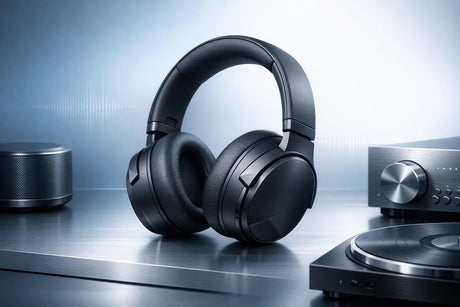
What Are Active Speakers
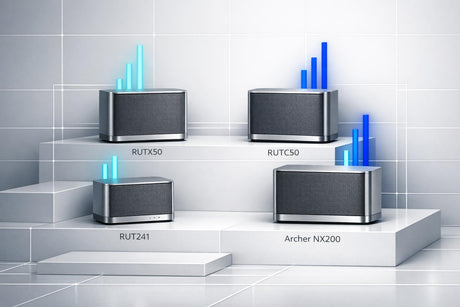
Active speakers are loudspeakers with a built-in amplifier. Unlike passive speakers, which only work when connected to a separate amplifier or receiver, active speakers are ready to use right away. Simply connect an audio source – a TV, phone, computer, or player – and the system works.
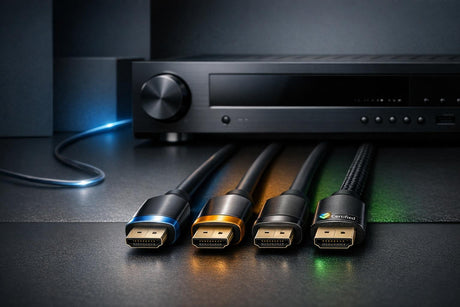
Most active speakers feature functionalities such as Bluetooth or Wi-Fi, optical, HDMI, or analog connections. This allows for easy integration into modern homes without complicated wiring.
Active speakers are particularly valued for their simplicity, quick setup, and good sound balance. They are an ideal solution for those who want high-quality sound but don't want to delve into complex Hi-Fi systems or matching individual components.
How Active Differ from Passive Speakers
Active and passive speakers differ in their operating principle, ease of use, and system expansion capabilities. Active speakers have an integrated amplifier, allowing them to be used immediately without additional equipment. This means fewer cables, simpler setup, and less technical knowledge. For this reason, active speakers are often chosen for homes, workplaces, or by those who want a quick and neat solution.
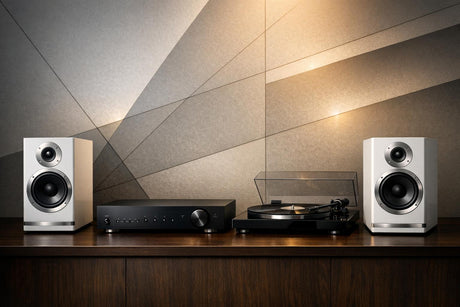
Passive speakers require an external amplifier. While this demands more planning and higher initial investment, passive systems offer greater flexibility. You can change the amplifier, speakers, or other components, gradually improving the system and adapting it to your listening habits.
In short, active speakers focus on convenience and simplicity, while passive speakers aim for maximum control, individual tuning, and an audiophile experience. The choice depends on your needs, space, and desire to delve into sound systems.
Advantages and Disadvantages
Advantages
Active speakers are primarily valued for their simplicity and convenience. The integrated amplifier eliminates the need for additional equipment, meaning the system takes up less space and requires fewer cables. Most active speakers come with Bluetooth, Wi-Fi, optical, or HDMI connections, making them easy to connect to a TV, computer, or mobile device. Such speakers also often offer a good price-to-quality ratio – for a smaller investment, you get a fully functional solution without complex settings. This is an ideal choice for those who want a quick and neat sound solution at home.
Disadvantages
The main disadvantage of active speakers is limited system expansion capabilities. Since the amplifier is already integrated, it is difficult to change or upgrade individual components in the future. If the internal electronics fail, repairs can be more expensive than with passive systems. Furthermore, for more demanding audiophiles, active speakers may offer fewer options for individual sound tuning compared to separate Hi-Fi systems.
Who Are Active Speakers For
Active speakers are an excellent choice for those who want quality sound without complex equipment and a lengthy setup process. They are particularly suitable for homes where a neat, minimalist system is needed for the living room, bedroom, or home office. Thanks to the integrated amplifier and simple connectivity, active speakers allow you to quickly enjoy music or movies without additional components. For a living room, floor-standing speakers are recommended.
They are also ideal for work or study – with a computer, in creative studios, or remote work environments. For such rooms, bookshelf speakers are of an ideal size. Clear sound, compact size, and reliable performance allow you to concentrate without technical worries.
For young users or beginners, active speakers are a great start to quality sound. There's no need to delve into questions of amplifiers, impedances, or compatibility.
Active speakers are also suitable for those who frequently use Bluetooth or Wi-Fi streaming and appreciate convenient music control from their phone. If priority is given to simplicity, functionality, and quick results, active speakers will be the optimal choice.